

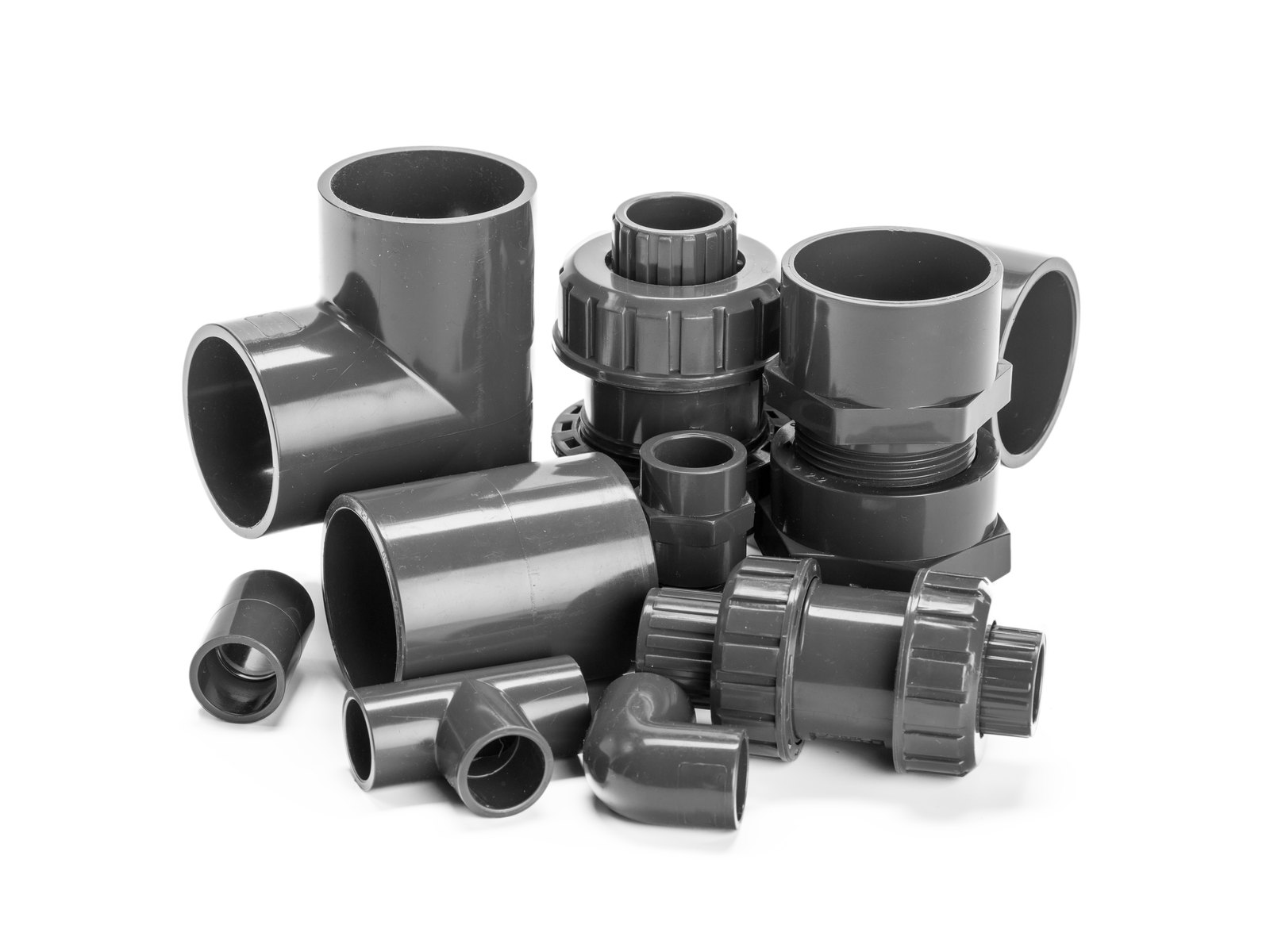
Overview
Pressure fittings and drain-waste-vent fittings manufactured alongside our pipe, so the system comes from one source.
Key specifications
Where it is used
- Irrigation
- Water treatment
- Water supply
- Chemical applications
- Swimming pools
- Food industries
- Industrial applications
Jointing, storage and handling
Rubber-ring jointing. Check that the spigot and socket are free of dust, grit and grease, and as dry as possible. Insert the pipe into the socket without the seal ring and mark it at full insertion depth. Fit the seal into the groove of the socket with the tapered section facing the outside of the socket. Apply jointing lubricant to the chamfer and the end of the spigot only — never to the seal. Push the pipe firmly into the socket up to the insertion mark. Where an expansion gap is required, pull the pipe back by the amount specified.
Storage and handling. Store in a well-ventilated, shaded area, on level ground clear of stones and sharp projections. Keep elastomeric rings in the shade and fit them only when the pipe is in the trench and ready for jointing. Store solvent cement and cleaning fluid in a cool, dry place.
Quality
Material is tested in our own laboratory before and after it becomes pipe. See our quality and certifications.

